Sylvia Plath was one of the most dynamic and admired poets of the 20th century. By the time she took her life at the age of 30, Plath already had a following in the literary community. In the ensuing years her work attracted the attention of a multitude of readers, who saw in her singular verse an attempt to catalogue despair, violent emotion, and obsession with death. In the New York Times Book Review, Joyce Carol Oates described Plath as “one of the most celebrated and controversial of post-war poets writing in English.” Intensely autobiographical, Plath’s poems explore her own mental anguish, her troubled marriage to fellow poet Ted Hughes, her unresolved conflicts with her parents, and her own vision of herself. On the World Socialist web site, Margaret Rees observed, “Whether Plath wrote about nature, or about the social restrictions on individuals, she stripped away the polite veneer. She let her writing express elemental forces and primeval fears. In doing so, she laid bare the contradictions that tore apart appearance and hinted at some of the tensions hovering just beneath the surface of the American way of life in the post war period.” Oates put it more simply when she wrote that Plath’s best-known poems, “many of them written during the final, turbulent weeks of her life, read as if they’ve been chiseled, with a fine surgical instrument, out of arctic ice.” Plath has inspired countless readers and influenced many poets since her death in 1963.
Tuesday, July 2, 2019

Monday, July 1, 2019
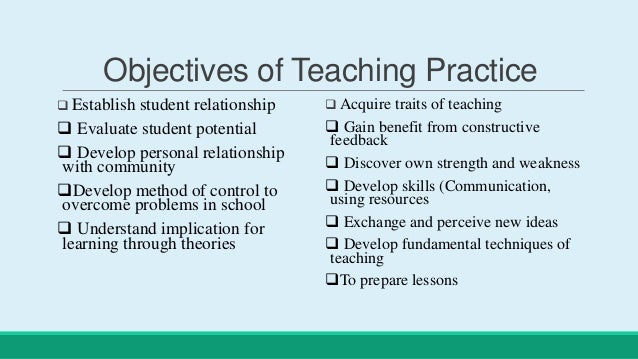
TEACHING PRACTICE
A teacher is a person who helps people to learn. A teacher often works in a classroom.
WHAT DO YOU MEAN BY LANGUAGE BASED CURRICULUM?
LANGUAGE-BASED CURRICULUM
A language-based curriculum provides well-planned content information that is strategically presented to facilitate learning and enrich the language experiences of the students across all subject areas. Beyond language arts classes, language learning is embedded in all content classes, the arts, and physical education. Content and language come together as teachers carefully consider curricula requirements as well as the language demands of lessons. Teachers not only analyze the content material and reading resources to be used but also identify the important speaking, listening, reading comprehension, and writing skills demanded by each lesson. Classroom teachers then incorporate the techniques to facilitate content and language learning by students. Recess and playground activities are also viewed as important contexts for language learning and practice.
Through staff development, Windward teachers learn how to extend language instruction through all classroom lessons. Teachers learn how to use and modify ‘teacher language’ in ways that encourage students to participate in class discussions, attend to and remember important information and follow instructions. Windward teachers attend language development workshops and learn strategies that can be used to help students improve sentence and text comprehension, learn vocabulary, practice inferential and critical thinking, and become more adept with social uses of language.
A direct instruction teaching model is used throughout the School to deliver the curriculum. Teachers follow this direct instruction model—a structured, systematic, and effective research-based methodology—in order to maximize students’ academic growth. The direct instruction model is an explicit approach to teaching that includes both a specific instructional design and delivery procedures. Students are provided with a purpose and rationale for learning a new strategy or skill, clear explanations, demonstrations, and time to practice with teacher feedback until mastery is achieved.
Friday, June 28, 2019
Monday, June 24, 2019
FIRST PHASE TEACHING PRACTICE
FIRST PHASE TEACHING PRACTICE AT ST JOSEPH BHSS.
I REACHED AT THE SCHOOL AT 9 AM. AFTER HANDING OVER THE LETTER AND THE ATTENDANCE BOOK TO THE HEADMASTER WE WENT TO THE STAFF ROOM TO SEE OUR RESPECTIVE TEACHERS AND WENT TO THE LIBRARY HALL. WE GOT LESS SUBSTITUTION PERIODS IN THE SCHOOL THAN WE GOT BEFORE.
THERE WE PREPARED OUR LESSON PLANS FOR TAKING MY FIRST CLASS. I GOT THE LAST PERIOD, AND IT WAS FROM 3 TO 3.30 A HALF AN HOUR CLASS. I WAS A LITTLE BIT NERVOUS BUT SOMEHOW I MADE IT VERY WELL. BUT THE STUDENT WERE REALLY UNRULY,NOISY BUT THEY WERE ALSO INTELLIGENT. AFTER 3.30 PM THE STUDENT TEACHERS WENT TO THE HEADMASTERS ROOM, SIGNED THE ATTENDANCE BOOK AND WENT BACK HOME.
Monday, June 17, 2019
INSTRUCTIONAL OBJECTIVES.
brief introduction to instructional
objectives as the basis of scientific evaluation – bloom’s taxonomy of educational objectives.
Bloom's Taxonomy was created in 1956 with a group of examiners under the leadership of educational psychologist Dr Benjamin S Bloom in order to promote higher forms of thinking in education, such as analyzing and evaluating concepts, processes, procedures, and principles rather than just remembering facts. It is most often used when designing educational, training, and learning processes.According to Bloom’s Taxonomy human mind has three divisions – Cognitive domain, Psychomotor domain and Affective domain.
žAccording to Dr Benjamin S Bloom instructional objectives are identified as the goals that one, as a teacher, aims at while teaching.On the one hand, they provide direction for planning appropriate instruction and on the other hand they provide a basis for determining whether one has achieved what one has set out to accomplish. They provide criteria for assessing the outcomes of ones teaching.Instructional plans for the classroom specify what should be taught and when and how it should be taught.
žSpecifications or specific outcomes of learning are expressed in terms of pupil’s behavior.These specifications tells us what the pupil will do or how he will behave if he has realized the objective.For e.g. A learner acquires knowledge of certain information. If a learner, while evaluated, is found to be able to recall the information when asked for or to recognize it, one can conclude that he or she has acquired the knowledge. So the learner recalls the information and the learner recognizes the information can be cited as specific behaviors or specifications. All educational objectives have thus been analyzed into specifications. The objectives together with these specifications make the taxonomy complete and more meaningful.
Wednesday, June 5, 2019
ENVIRONMENT
World Environment Day is held each year on June 5. It is one of the principal vehicles through which the United Nations (UN) stimulates worldwide awareness of the environment and enhances political attention and action. World Environment Day promotes ways to improve the Earth's environment, such as conserving forests.

Subscribe to:
Posts (Atom)