Thursday, February 6, 2020

REFLECTIVE JOURNAL 4th WEEK

         This week we started our peer evaluation. It was such a good experience for us by evaluating our peers classes. Then an eye donation camp was conducted in the school as a part of lions club inauguration. Where students from different school came to test their eye. 

       Then after that in the same week i introduced my students about writing proverbs. According to the roll numbers they had to explain about a particular proverb and explain about it in detail.  
  
        The last day we distributed sweets in our respective classes and to the whole teachers in the school. i was really happy that i could complete my last phase of teaching successfully . With heartful of memories i stepped out from the school back to my college the very next day to continue my venture....

REFLECTIVE JOURNAL 3rd WEEK

                 The third week started very soon.This week an assembly was held in the school auditorium to hand over the certificates to the students who scored good marks. Lots of students from each classes collected the certificates accordingly and they were really happy when they received the certificates from their principal. 

              As usual classes went on as well as substitutions. During free times we had completed our lesson plans and prepared well for our classes.

REFLECTIVE JOURNAL 2nd WEEK


This week our optional teacher came for observing the class. we were not at all ready to take the class at that day. But soon she came we arranged our classes accordingly. students were really attentive during my class. They have done all the activities i gave them and responded positively throughout the class. Teacher gave me positive responses by seeing my class. I was so happy and i knew that i took all my good efforts to make the class better.Nothing much happened ion that particular week. substitutions classes were less according to the last week and we were so relaxed and was able to prepare for the classes well.  

REFLECTIVE JOURNAL 1st WEEK

             Always reached the respective school at 9 am. From the first week itself we were given substitution classes. It was tough for me to handle the classes in this week. Because the students were really noisy and were not interested to be in the class.
             

         But somehow i showed them several videos related to the lesson and made them interested to sit in my class. we got substitution classes from 1 standard to 10th standard accordingly. we could also complete our lesson plans according to the free periods that we get from the school and we were also able to plan how to make the classes effective. 

Sunday, January 26, 2020

REPUBLIC DAY

Republic Day of India is celebrated on January 26 to mark the day when the Constitution of India came into effect.
Why is Republic Day celebrated?
The Constitution of India, which was adopted by the Constituent Assembly on November 26, 1949, came into effect on January 26, 1950. This completed India's transition towards becoming an independent republic with a democratic government system. January 26 was also chosen as the day to mark Republic Day because it had been on this day that the Indian National Congress (INC) proclaimed the Declaration of Indian Independence in 1929. This was contrary to the 'dominion' status offered by the British.
Is Republic Day a holiday?
Yes, Republic Day is a national holiday in India. However, schools celebrate the day with patriotic zeal, with students and teachers organising programmes and performances to mark the day.
Republic Day parade
The Republic Day parade, first held in 1950, has been a yearly ritual since. The parade marches from the Rashtrapati Bhawan along the Rajpath in New Delhi. Several regiments of the army, navy, and air force, along with their bands, march to India Gate. The parade is presided over by the President of India, who is the Commander-in-Chief of the Indian Armed Forces. As he unfurls the tricolour, the national anthem is played. The regiments of the Armed Forces then start their march past. Prestigious awards like Kirti Chakra, Ashok Chakra, Paramvir Chakra and Vir Chakra are given out by the President. Nine to twelve different regiments of the Indian Army, in addition to the Navy and Air Force march toward India Gate along with their bands. Contingents of paramilitary forces and other civil forces also participate in the parade. Tableau from various states display their culture.
Republic Day 2020
The chief guest of Republic Day 2020 celebrations will be Brazilian President Jair Bolsonaro. The Ministry of Ministry of Defence has selected 22 tableaus from 56 proposals for the Republic Day parade. The National Disaster Response Force (NDRF)'s tableau will depict its humanitarian efforts during catastrophes like cyclones and floods, rolling down the Rajpath for the first time this Republic Day Parade. This year, the newly inducted Apache and Chinook heavy-lift helicopters will make their debut at the flypast to showcase the firepower of the Indian Air Force.

Thursday, December 12, 2019

CONSCENTIZATION PROGRAM AT NSS PUBLIC SCHOOL


REPORT ON CONSCIENTIZATION PROGRAM DONE AT NSS PUBLIC SCHOOL

          As a part of our B.Ed curriculum, we the teacher trainees of NSS Public school, perunthanni conducted a conscientization program on 12th December 2019, on the topic " An awareness programme on Junk food". Our group consists of three trainees Jishna, Vijisha and Greeshma from English optional. 

        On 12 December 2019, we decided to conduct a conscientization program on this particular topic. First we planned different activities that we can do for the conscientization program. Principal allowed us to conduct this program for the 7th standard  students. The time scheduled for the program was from 11 am to 11.45 am. Then we sought permission from the class teacher and she gave us the permission and support to take the class.


Friday, November 29, 2019

READING AND REFLECTION SEMESTER 4


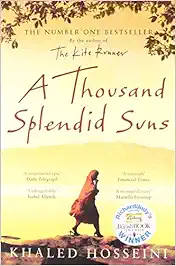
          A Thousand Splendid Suns is set in Afghanistan from the early 1960s to the early 2000s. Mariam, a young girl in the 1960s, grows up outside Herat, a small city in Afghanistan. Mariam has complicated feelings about her parents: She lives with her spiteful and stubborn mother, Nana; while her father Jalil, a successful businessman, visits Mariam — his only illegitimate child — once a week. Mariam resents her limited place in Jalil's life; she wants to live with him, his three wives, and her half-siblings in Herat. She makes her wishes known by asking Jalil to take her to see Pinocchio for her fifteenth birthday. Jalil reluctantly agrees, but then never shows up to take her to the film. Mariam walks to heart and finds Jalil's house, but he doesn't let her in, so she sleeps on the street. The next morning, Jalil's chauffeur drives Mariam home where she finds that her mother has committed suicide.
Mariam is taken to Jalil's home after her mother's funeral. Jalil's wives want nothing to do with Mariam, so they force him to let her marry Rasheed, a widowed shoemaker in Kabul. At first Rasheed treats Mariam decently, but after she suffers miscarriage after miscarriage, he abuses her both physically and verbally. It becomes clear that Rasheed's only use for Mariam is in her ability to replace the son he lost years ago.
Growing up down the street from Rasheed and Mariam is Laila, a young, intelligent girl from a loving family. However, the Afghani war against the Soviets disrupts Laila's childhood and both her older brothers leave to join the war. Laila seeks comfort from her best friend, Tariq, a boy a few years older than her. Just before Laila reaches adolescence, her parents' receive news that both of their sons have been killed. A few years later, war reaches Kabul and bombs fall on the city regularly. By now, Tariq and Laila are teenagers and in love. As Tariq tells Laila that he and his family are fleeing to Pakistan, the couples makes love for the first time, quickly and passionately. A few days later, Laila's parents decide to leave Afghanistan as well, but as they are packing a rocket hits their house, killing Laila's parents and wounding her.
Rasheed and Mariam nurse Laila back to health and after she recovers, a stranger, Abdul Sharif brings her news that Tariq has died. Devastated and realizing she's pregnant with Tariq's child, Laila agrees to marry Rasheed. Mariam is initially hurt and threatened by Laila's presence and refuses to have anything to do with her. However, after Laila gives birth to a daughter, Aziza, the women come to see themselves as allies against Rasheed's abusive, manipulative ways. A few years later, Laila gives birth to a son, Zalmai. Then, one afternoon, after years of abuse and sadness, Laila is shocked to see a man standing at her front door: Tariq.
Tariq and Laila spend the afternoon together while Rasheed is at work. Laila and Mariam realize that Rasheed hired Abdul Sharif to tell Laila about Tariq's untrue demise so she wouldn't run away. When Rasheed finds out that Tariq has come home, he brutally beats Laila. With a shovel, Mariam kills Rasheed. The next day, Mariam turns herself over to the Taliban in an effort to clear the way for Laila to find sanctuary for herself and her children in Pakistan with Tariq.
In Pakistan, Tariq and Laila marry and finally begin the life they dreamed of so many years ago. With time, both of Laila's children warm to Tariq and they enjoy their new life. But in September, 2001, their happiness is overshadowed by news that the United States has attacked Afghanistan. Following the US invasion, conditions in Kabul improve, and Laila insists that her family move back home so they can help rebuild their city. They stop by Herat on their way to Kabul, where Laila visits Mariam's old home and is able to come to terms with her grief over Mariam's execution. Laila and Tariq build a new life in Kabul: Laila becomes a schoolteacher at the orphanage where Aziza once lived. And when Laila becomes pregnant, she decides that if she has a girl, she'll name her Mariam.

Thursday, November 7, 2019

SECOND PHASE TEACHING PRACTICE

SECOND PHASE TEACHING PRACTICE AT NSS PUBLIC SCHOOL ,PERUNTHANNI 


                             We the student teachers reached the school at 9 am. But we were only able to meet the principal at 10 am. We handed over the attendance book to her and signed it. After that we straightly want to meet our concern teacher to collect the time table, She gave us several instructions regarding the class and the lesson. I got 8 A for teaching my subject.

                             Later we went to the auditorium and settled there. It was such a quite place so that we were able to complete all our pending works regarding the lesson plans and activity cards. Then we again went to see our concern teacher to get sign for our lesson plans. Coming back from there i prepared to take my first class. I got the last hour from 3.05 to 3.45.

                           I was able to handle the class because they were only 24 students. We the teachers were only able to leave the school at 4 pm in the evening. After 4 we went to the principals room and signed the attendance book and went back home at 4.15 hoping that the next day will be much better for me to handle the class accordingly. 

Friday, August 23, 2019

READING AND REFLECTION SEMESTER 3

Image result for animal farm   


                         Animal Farm is George Orwell's satire on equality, where all barnyard animals live free from their human masters' tyranny. Inspired to rebel by Major, an old boar, animals on Mr. Jones' Manor Farm embrace Animalism and stage a revolution to achieve an idealistic state of justice and progress. A power-hungry pig, Napoleon, becomes a totalitarian dictator who leads the Animal Farm into "All Animals Are Equal / But Some Are More Equal Than Others" oppression.
Written by: George Orwell
Type of Work: novel
Genres: political satire; allegory
First Published: August 17, 1945
Setting: Mr. Jones' Manor Farm
Major Thematic Topics: animalism; mob rule; virtue; religion as a drug; distortion of reality; death; false allegiance; political corruption
Motifs: rebellion; power; communism
Major Symbols: Cold War; the barn; the windmill
The three most important aspects of Animal Farm:
  • Animal Farm is an allegory, which is a story in which concrete and specific characters and situations stand for other characters and situations so as to make a point about them. The main action of Animal Farm stands for the Russian Revolution of 1917 and the early years of the Soviet Union. Animalism is really communism. Manor Farm is allegorical of Russia, and the farmer Mr. Jones is the Russian Czar. Old Major stands for either Karl Marx or Vladimir Lenin, and the pig named Snowball represents the intellectual revolutionary Leon Trotsky. Napoleon stands for Stalin, while the dogs are his secret police. The horse Boxer stands in for the proletariat, or working class.
  • The setting of Animal Farm is a dystopia, which is an imagined world that is far worse than our own, as opposed to a utopia, which is an ideal place or state. Other dystopian novels include Aldous Huxley's Brave New World, Ray Bradbury's Fahrenheit 451, and Orwell's own 1984.
  • The most famous line from the book is "All animals are equal, but some are more equal than others." This line is emblematic of the changes that George Orwell believed followed the 1917 Communist Revolution in Russia. Rather than eliminating the capitalist class system it was intended to overthrow, the revolution merely replaced it with another hierarchy. The line is also typical of Orwell's belief that those in power usually manipulate language to their own benefit.

Thursday, August 15, 2019

INDEPENDENCE DAY

In 1929, when Jawaharlal Nehru as Congress President gave the call for ‘Poorna Swaraj’ or total independence from British colonial rule, January 26 was chosen as the Independence Day. In fact, Congress party continued to celebrate it 1930 on wards, till India attained independence and January 26, 1950, was chosen as the Republic Day – the day India formally became a sovereign country and was no longer a British Dominion. powered by Rubicon Project
So how did August 15 become India’s independence day? Well, Lord Mountbatten had been given a mandate by the British parliament to transfer the power by June 30, 1948. If he had waited till June 1948, in C Rajagopalachari’s memorable words, there would have been no power left to transfer. Mountbatten thus advanced the date to August 1947.
At that time, Mountbatten claimed that by advancing the date, he was ensuring that there will be no bloodshed or riot. He was, of course, to be proven wrong, although he later tried to justify it by saying that “wherever colonial rule has ended, there has been bloodshed. 
Based on Mountbatten’s inputs the Indian Independence Bill was introduced in the British House of Commons on July 4, 1947, and passed within a fortnight. It provided for the end of the British rule in India, on August 15, 1947, and the establishment of the Dominions of India and Pakistan, which were allowed to secede from the British Commonwealth.
Mountbatten later claimed, as quoted in Freedom at Midnight, that “The date I chose came out of the blue. I chose it in reply to a question. I was determined to show I was master of the whole event. When they asked had we set a date, I knew it had to be soon. I hadn’t worked it out exactly then — I thought it had to be about August or September and I then went out to the 15th August. Why? Because it was the second anniversary of Japan’s surrender.”
On August 15, 1945, Japanese Emperor Hirohito gave a recorded radio address, which later came to be known as the Jewel Voice Broadcast.But how did Pakistan get independence on August 14? Actually, it didn’t. The Indian Independence Bill gave August 15 as the date of independence for both the countries. The first stamp issued by Pakistan mentioned August 15 as its independence day. In his first address to Pakistan, Jinnah actually said, “August 15 is the birthday of the independent and sovereign state of Pakistan. It marks the fulfillment of the destiny of the Muslim nation which made great sacrifices in the past few years to have its homeland.”
In 1948, Pakistan started marking August 14 as its independence day, either because the ceremony for the transfer of power in Karachi was held on August 14, 1947, or because August 14, 1947, was the 27th of Ramadan, a very sacred date to the Muslims.
Whatever be the case, 73 years on, India and Pakistan celebrate their hard-fought independence with patriotic fervor. The dates, in any case, hold far less significance than the mission to deliver the fruits of independence to the vast multitude of people in the two countries.

Wednesday, July 17, 2019

MY FAVORITE NOVEL : PRIDE AND PREJUDICE

The news that a wealthy young gentleman named Charles Bingley has rented the manor of Netherfield Park causes a great stir in the nearby village of Longbourn, especially in the Bennet household. The Bennets have five unmarried daughters—from oldest to youngest, Jane, Elizabeth, Mary, Kitty, and Lydia—and Mrs. Bennet is desperate to see them all married. After Mr. Bennet pays a social visit to Mr. Bingley, the Bennets attend a ball at which Mr. Bingley is present. He is taken with Jane and spends much of the evening dancing with her. His close friend, Mr. Darcy, is less pleased with the evening and haughtily refuses to dance with Elizabeth, which makes everyone view him as arrogant and obnoxious.
At social functions over subsequent weeks, however, Mr. Darcy finds himself increasingly attracted to Elizabeth’s charm and intelligence. Jane’s friendship with Mr. Bingley also continues to burgeon, and Jane pays a visit to the Bingley mansion. On her journey to the house she is caught in a downpour and catches ill, forcing her to stay at Netherfield for several days. In order to tend to Jane, Elizabeth hikes through muddy fields and arrives with a spattered dress, much to the disdain of the snobbish Miss Bingley, Charles Bingley’s sister. Miss Bingley’s spite only increases when she notices that Darcy, whom she is pursuing,pays quite a bit of attention to Elizabeth.
When Elizabeth and Jane return home, they find Mr. Collins visiting their household. Mr. Collins is a young clergyman who stands to inherit Mr. Bennet’s property, which has been “entailed,” meaning that it can only be passed down to male heirs. Mr. Collins is a pompous fool, though he is quite enthralled by the Bennet girls. Shortly after his arrival, he makes a proposal of marriage to Elizabeth. She turns him down, wounding his pride. Meanwhile, the Bennet girls have become friendly with militia officers stationed in a nearby town. Among them is Wickham, a handsome young soldier who is friendly toward Elizabeth and tells her how Darcy cruelly cheated him out of an inheritance.
At the beginning of winter, the Bingleys and Darcy leave Netherfield and return to London, much to Jane’s dismay. A further shock arrives with the news that Mr. Collins has become engaged to Charlotte Lucas, Elizabeth’s best friend and the poor daughter of a local knight. Charlotte explains to Elizabeth that she is getting older and needs the match for financial reasons. Charlotte and Mr. Collins get married and Elizabeth promises to visit them at their new home. As winter progresses, Jane visits the city to see friends (hoping also that she might see Mr. Bingley). However, Miss Bingley visits her and behaves rudely, while Mr. Bingley fails to visit her at all. The marriage prospects for the Bennet girls appear bleak.
That spring, Elizabeth visits Charlotte, who now lives near the home of Mr. Collins’s patron, Lady Catherine de Bourgh, who is also Darcy’s aunt. Darcy calls on Lady Catherine and encounters Elizabeth, whose presence leads him to make a number of visits to the Collins’s home, where she is staying. One day, he makes a shocking proposal of marriage, which Elizabeth quickly refuses. She tells Darcy that she considers him arrogant and unpleasant, then scolds him for steering Bingley away from Jane and disinheriting Wickham. Darcy leaves her but shortly thereafter delivers a letter to her. In this letter, he admits that he urged Bingley to distance himself from Jane, but claims he did so only because he thought their romance was not serious. As for Wickham, he informs Elizabeth that the young officer is a liar and that the real cause of their disagreement was Wickham’s attempt to elope with his young sister, Georgiana Darcy.
This letter causes Elizabeth to reevaluate her feelings about Darcy. She returns home and acts coldly toward Wickham. The militia is leaving town, which makes the younger, rather man-crazy Bennet girls distraught. Lydia manages to obtain permission from her father to spend the summer with an old colonel in Brighton, where Wickham’s regiment will be stationed. With the arrival of June, Elizabeth goes on another journey, this time with the Gardiners, who are relatives of the Bennets. The trip takes her to the North and eventually to the neighborhood of Pemberley, Darcy’s estate. She visits Pemberley, after making sure that Darcy is away, and delights in the building and grounds, while hearing from Darcy’s servants that he is a wonderful, generous master. Suddenly, Darcy arrives and behaves cordially toward her. Making no mention of his proposal, he entertains the Gardiners and invites Elizabeth to meet his sister.
Shortly thereafter, however, a letter arrives from home, telling Elizabeth that Lydia has eloped with Wickham and that the couple is nowhere to be found, which suggests that they may be living together out of wedlock. Fearful of the disgrace such a situation would bring on her entire family, Elizabeth hastens home. Mr. Gardiner and Mr. Bennet go off to search for Lydia, but Mr. Bennet eventually returns home empty-handed. Just when all hope seems lost, a letter comes from Mr. Gardiner saying that the couple has been found and that Wickham has agreed to marry Lydia in exchange for an annual income. The Bennets are convinced that Mr. Gardiner has paid off Wickham, but Elizabeth learns that the source of the money, and of her family’s salvation, was none other than Darcy.
Now married, Wickham and Lydia return to Longbourn briefly, where Mr. Bennet treats them coldly. They then depart for Wickham’s new assignment in the North of England. Shortly thereafter, Bingley returns to Netherfield and resumes his courtship of Jane. Darcy goes to stay with him and pays visits to the Bennets but makes no mention of his desire to marry Elizabeth. Bingley, on the other hand, presses his suit and proposes to Jane, to the delight of everyone but Bingley’s haughty sister. While the family celebrates, Lady Catherine de Bourgh pays a visit to Longbourn. She corners Elizabeth and says that she has heard that Darcy, her nephew, is planning to marry her. Since she considers a Bennet an unsuitable match for a Darcy, Lady Catherine demands that Elizabeth promise to refuse him. Elizabeth spiritedly refuses, saying she is not engaged to Darcy, but she will not promise anything against her own happiness. A little later, Elizabeth and Darcy go out walking together and he tells her that his feelings have not altered since the spring. She tenderly accepts his proposal, and both Jane and Elizabeth are married.


Tuesday, July 2, 2019

MY FAVAOURITE POET

Image result for sylvia plath"


Sylvia Plath was one of the most dynamic and admired poets of the 20th century. By the time she took her life at the age of 30, Plath already had a following in the literary community. In the ensuing years her work attracted the attention of a multitude of readers, who saw in her singular verse an attempt to catalogue despair, violent emotion, and obsession with death. In the New York Times Book Review, Joyce Carol Oates described Plath as “one of the most celebrated and controversial of post-war poets writing in English.” Intensely autobiographical, Plath’s poems explore her own mental anguish, her troubled marriage to fellow poet Ted Hughes, her unresolved conflicts with her parents, and her own vision of herself. On the World Socialist web site, Margaret Rees observed, “Whether Plath wrote about nature, or about the social restrictions on individuals, she stripped away the polite veneer. She let her writing express elemental forces and primeval fears. In doing so, she laid bare the contradictions that tore apart appearance and hinted at some of the tensions hovering just beneath the surface of the American way of life in the post war period.” Oates put it more simply when she wrote that Plath’s best-known poems, “many of them written during the final, turbulent weeks of her life, read as if they’ve been chiseled, with a fine surgical instrument, out of arctic ice.” Plath has inspired countless readers and influenced many poets since her death in 1963.

REFLECTIVE JOURNAL 4th WEEK

         This week we started our peer evaluation. It was such a good experience for us by evaluating our peers classes. Then an eye donat...